
update Updated
category News
Technical visits, discussions with local communities and exploring nature-based solutions: on Lake Titicaca, cooperation between river basin organisations is taking shape as part of the Peer-to-Peer (P2P) project, funded by the European Union.
How can we reconcile ecosystem conservation, improved water quality and the needs of local communities at the catchment level? Which nature-based technical solutions should be implemented, and how can they be adapted to local circumstances? These are all questions facing catchment organisations, sometimes thousands of kilometres apart, but to which cooperation between peers can provide answers.
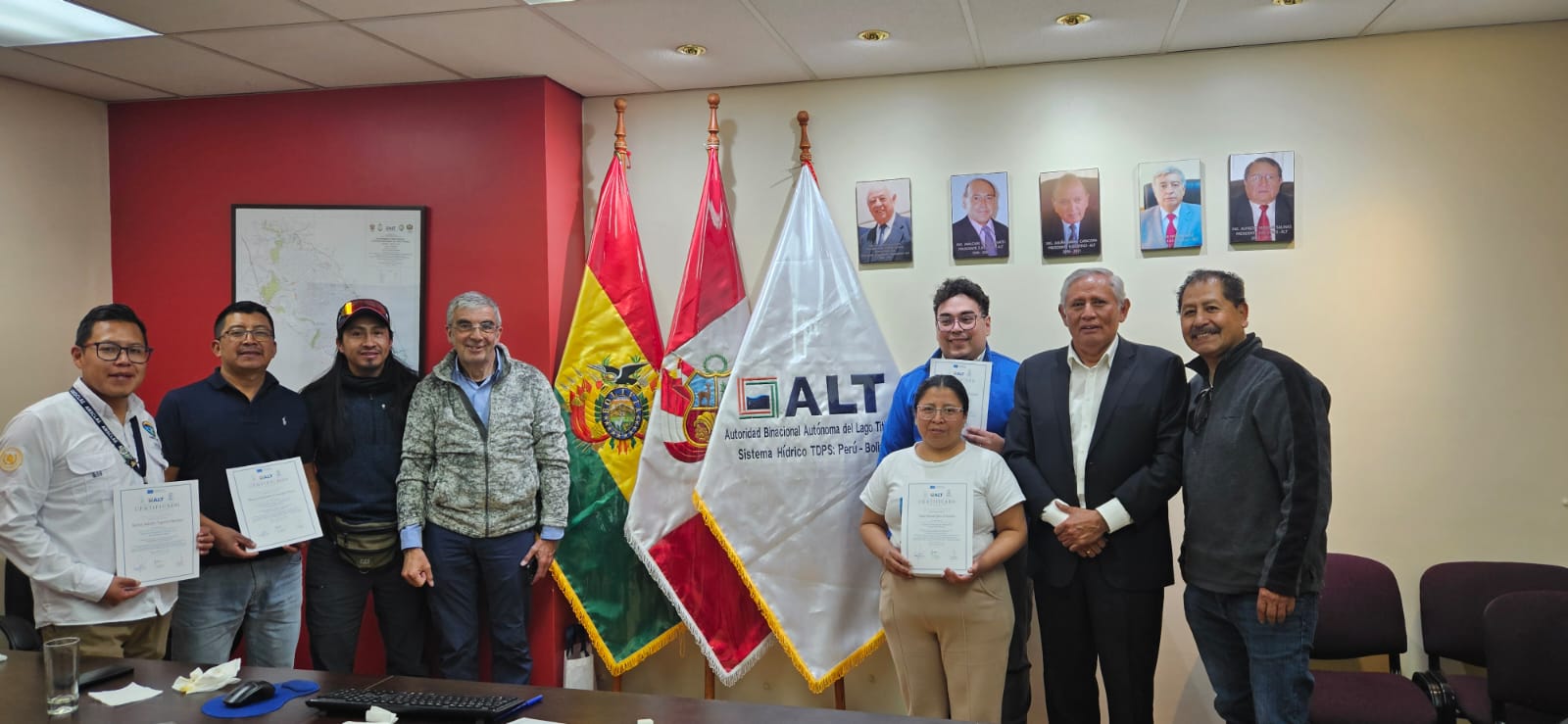
In October 2026, the Autonomous Binational Authority of Lake Titicaca (ALT) hosted a delegation from the Authority for the Sustainable Management of the Lake Atitlán Basin and its Environment (AMSCLAE) in Guatemala. This technical visit formed part of the P2P project, implemented by INBO and funded by the European Union.
Within this project, the two organisations are brought together in a partnership, designed to promote technical exchanges, the sharing of expertise and mutual learning between peers, despite their different territorial and institutional contexts.
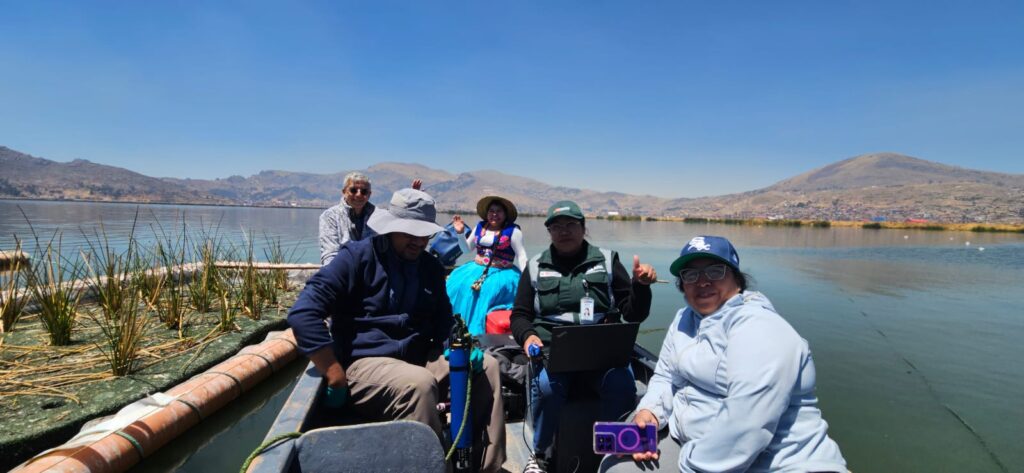
Throughout the week,meetings and field visits enabled the teams to discover the practices implemented in the Lake Titicaca catchment area, to compare experiences and to discuss the challenges encountered. These opportunities for dialogue facilitate the sharing of knowledge that can be directly applied to the organisations’ day-to-day work.
gallery_thumbnailPhoto gallery
Practical solutions at the heart of the discussions
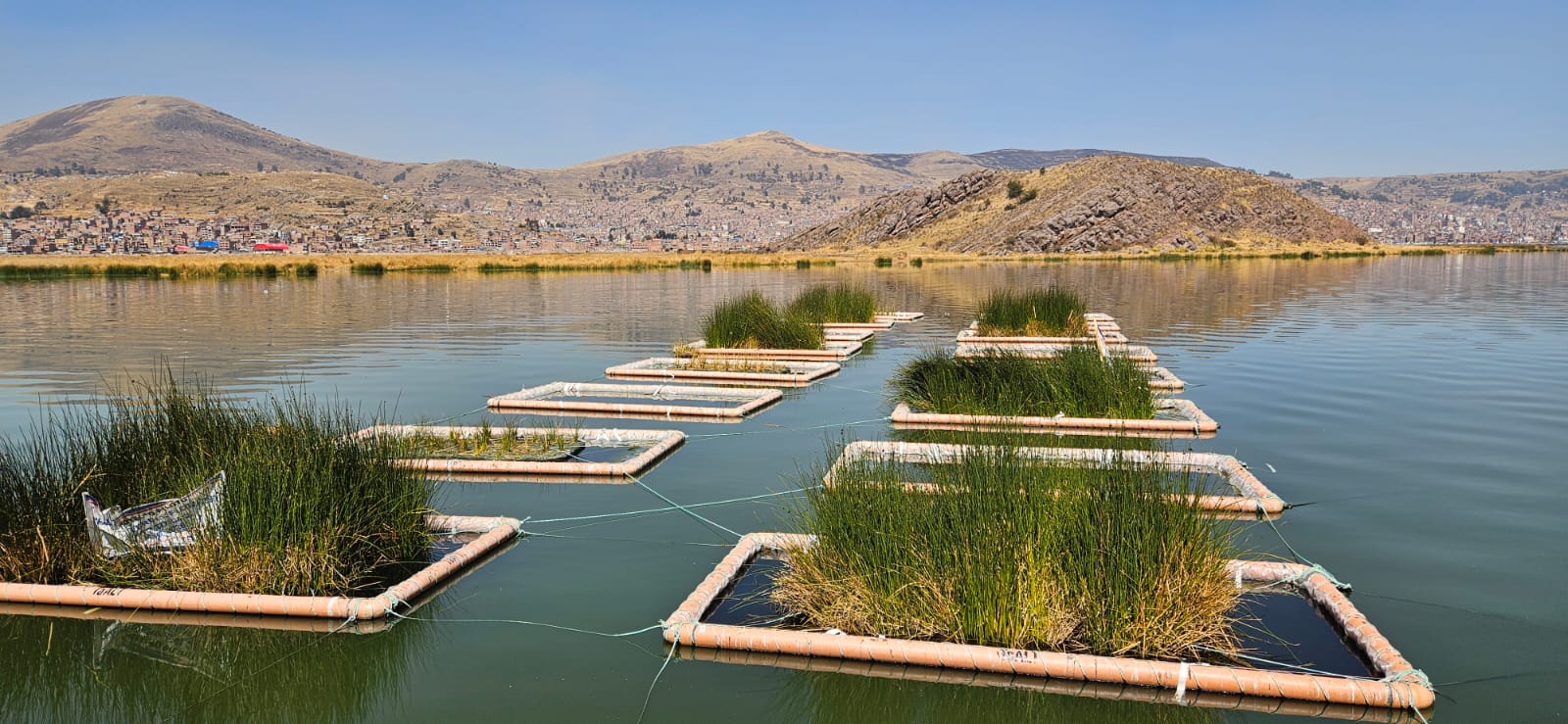
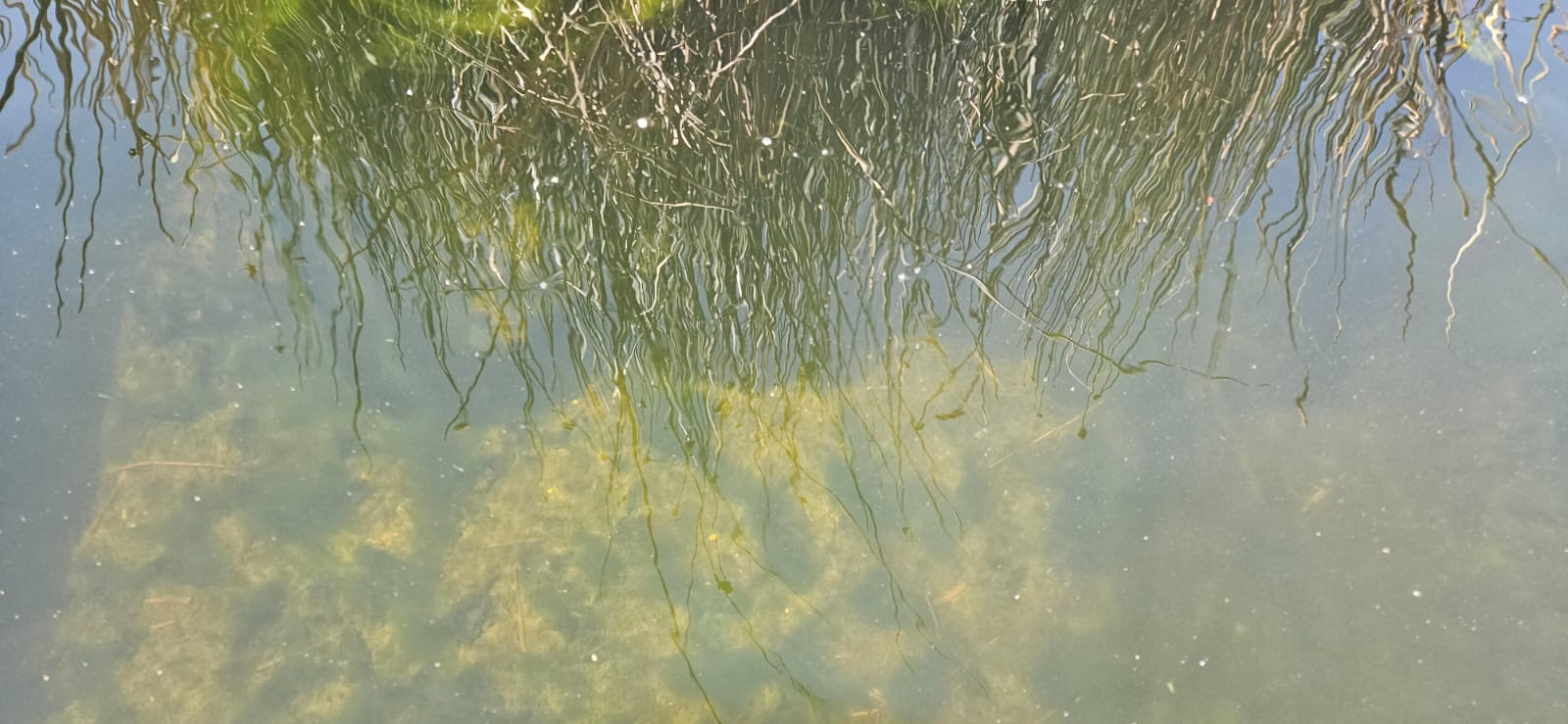
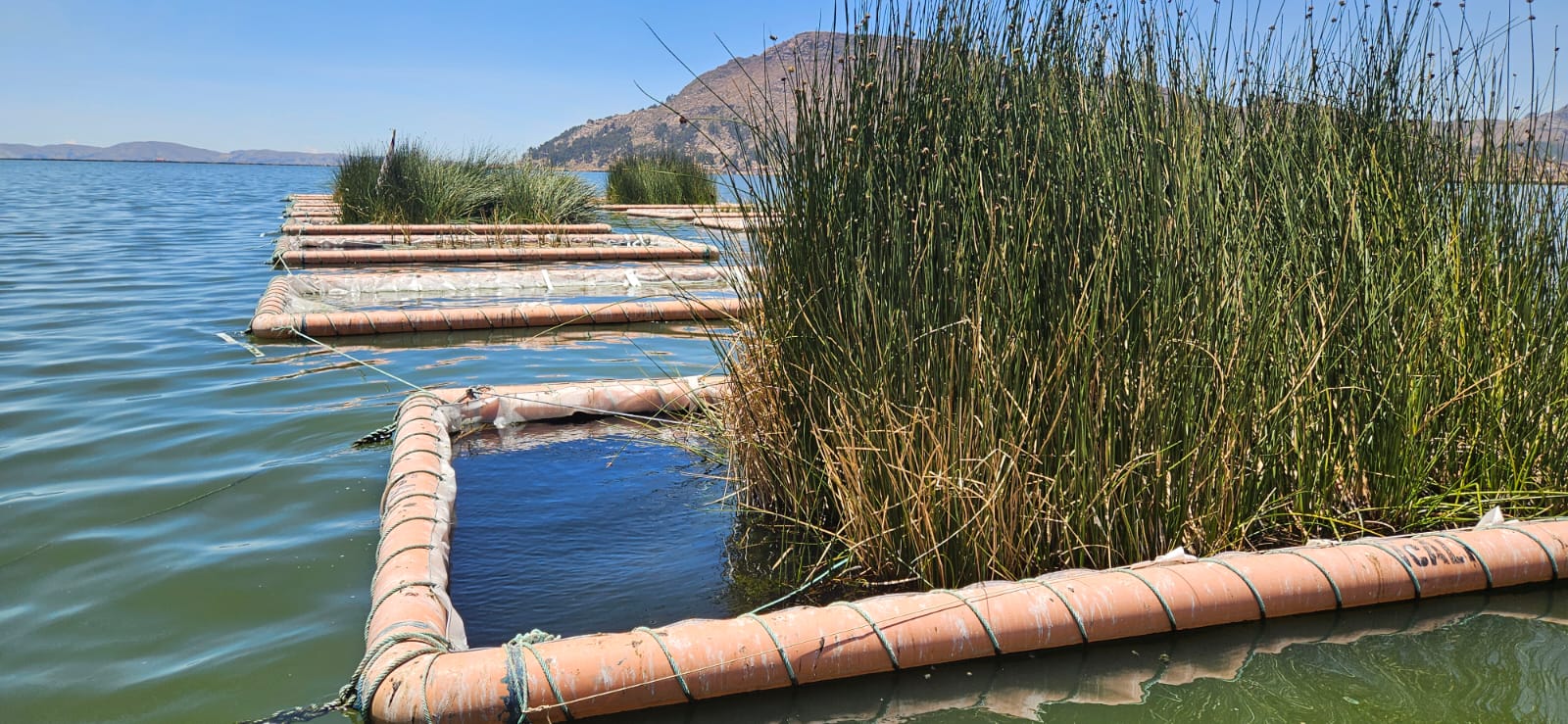
One of the highlights was a visit to the ‘floating green filters’ made of totora (an aquatic plant emblematic of Lake Titicaca) in Puno’s inner bay, an experimental project funded by the “Living Lakes: Biodiversity and Climate” project. Participants were able to observe first-hand the clarity of the water within the totora modules – an encouraging finding which, combined with the monitoring results, provides valuable information for assessing the contribution of this natural solution to improving water quality.
The ALT technical team, notably the limnologist Mr Xavier Lazzaro, a specialist at the institution, presented the experimental protocol, the results and the monitoring procedures for the pilot project. Mr Lazzaro explained the scientific basis of the project and guided the analysis of the conditions for its potential adaptation to Lake Atitlán. The requirements for the installation, maintenance and monitoring of this alternative—which continues to be assessed as a complement to sanitation measures—were examined.
The technical work involved measuring water quality at various depths and integrating the data with satellite imagery. The visit also provided an opportunity to meet local communities living around the lake who are directly affected by its conservation. These discussions highlight the importance of taking into account local realities and the needs of local people when implementing technical solutions.
The aim is to learn from these experiences, compare approaches and identify practices of mutual interest: peer-to-peer sharing is not about replicating a model exactly, but about drawing inspiration from existing solutions to adapt them to each specific context.
Making the sharing of experience a driver of cooperation
By fostering networking amongst professionals, technical exchanges and learning through practical experience, the P2P project helps to build the capacity of organisations and improve integrated water resource management.
This mission illustrates the programme’s purpose: to turn the experience of each peer into a collective resource, by building long-term bridges between regions to develop tailored responses to the shared challenges of river basin management.