update Updated
category Cooperation Governance News Transboundary cooperation
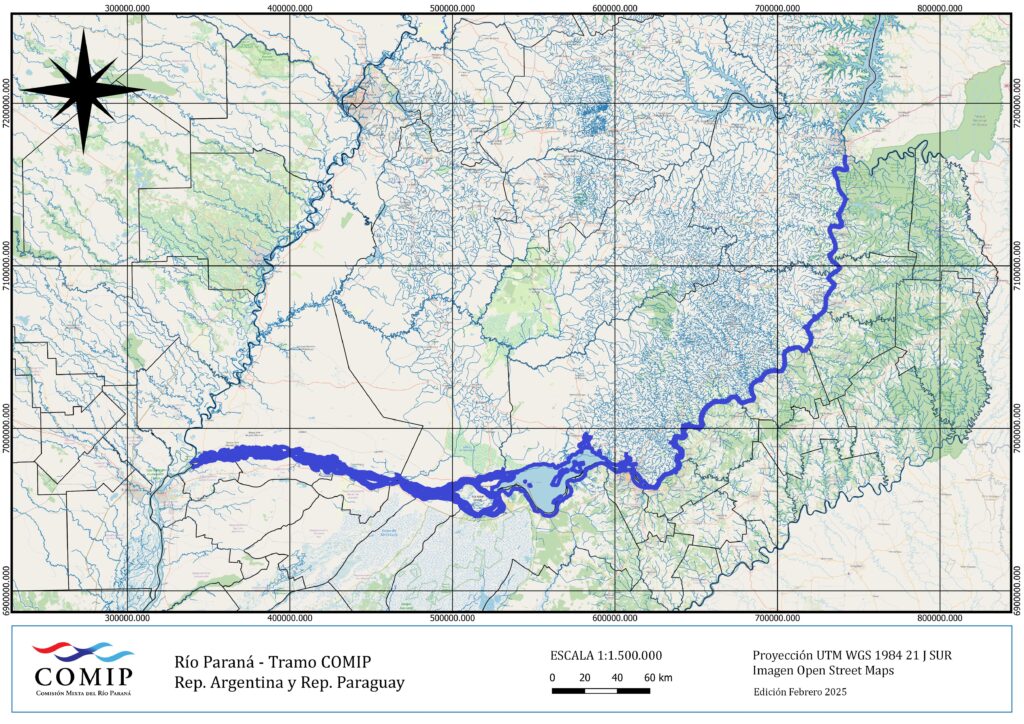
The fish fauna that inhabit rivers do not recognize national borders. Their conservation and development in rivers shared between two or more countries requires a special methodology and a governance scheme that allows for the articulation of interests.
The fish fauna of the Paraná River, with more than 200 species of fish of high ecological and economic value, its conservation requires effective binational policies, which makes coordinated management between Argentina and Paraguay essential.
In 1996, both countries signed the Convention on the Conservation and Development of Fish Resources for the Shared Sections of the Paraná and Paraguay Rivers, an international treaty approved by their respective parliaments. Its implementation is in the hands of the Argentine-Paraguayan Mixed Commission of the Paraná River (COMIP), which coordinates scientific studies and their translation into fisheries management policies.
Under the supervision of the Ministries of Foreign Affairs, COMIP works on the regulation of fishing bans, the protection of schools of fish, the control of fishing activity and the impact of climate change on aquatic ecosystems. In addition, it addresses the proliferation of invasive species, the protection of native species and fisheries management through unified binational regulations.
This approach to transboundary governance integrates science, policy and sustainable water management, ensuring the conservation of aquatic biodiversity and the development of riverside communities. It is a model of cooperation in the integrated management of water resources that strengthens the resilience of shared ecosystems.